
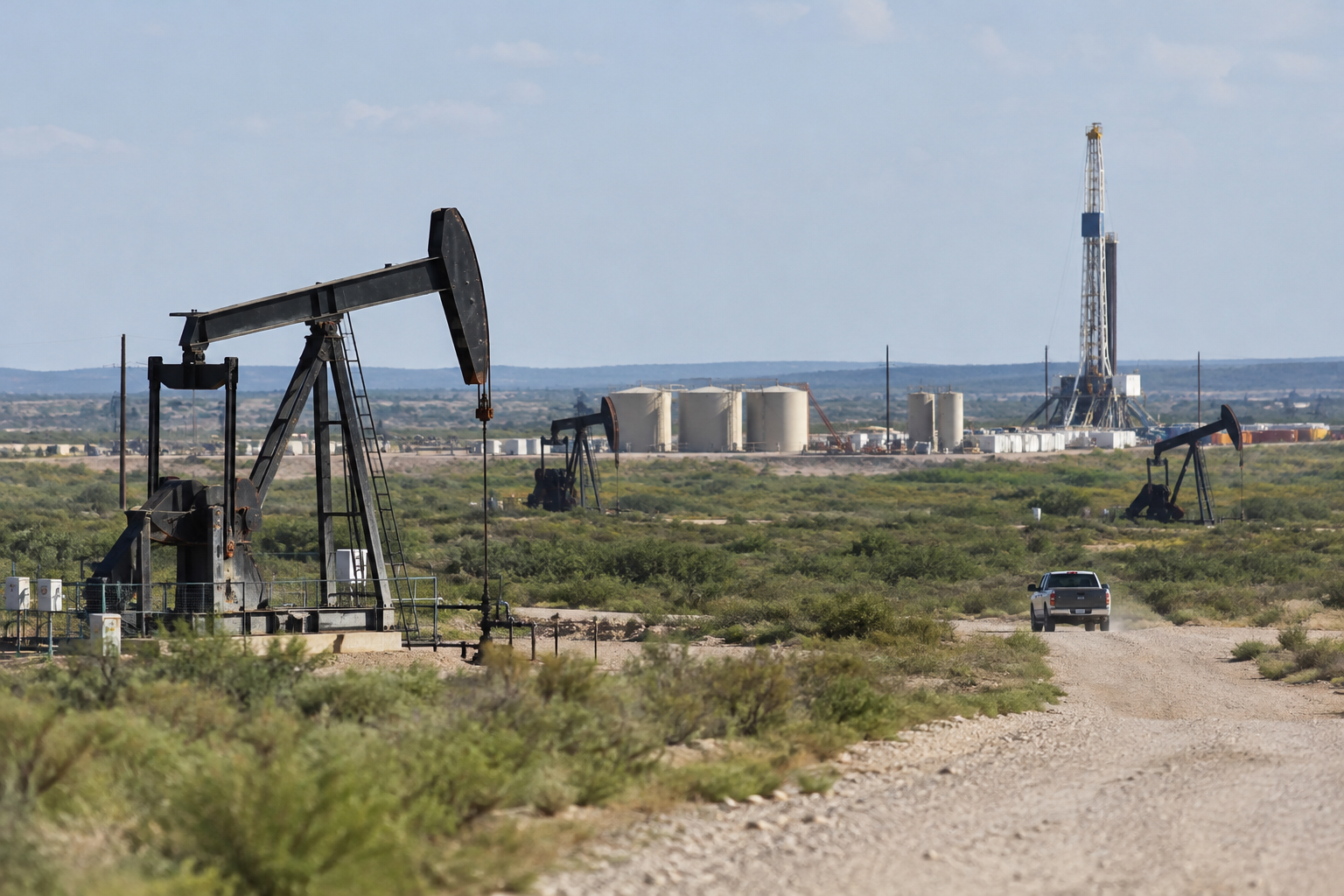
US shale consolidation is once again putting balance sheets under the spotlight. Crescent Energy’s agreement to acquire Devon Energy’s Eagle Ford assets gives $CRGY a larger position in a major US oil and gas region, but it also raises questions about financing burden, production guidance and how much strategic flexibility the buyer may retain.
For $DVN, the sale points in the opposite direction: a reshaping of its asset mix and a potentially sharper focus on balance-sheet priorities. The headline figure is approximately $4.2 billion, according to Seeking Alpha, while StockTitan reported approximately $3.85 billion. That gap is not a footnote. Until formal terms provide more detail, investors should treat the two figures as separate reported values rather than forcing an unsupported reconciliation.
A bigger Eagle Ford footprint, with a bigger financial question
The strategic logic for Crescent is clear enough at a high level. Buying Devon’s Eagle Ford assets could expand $CRGY’s exposure to an established US shale basin and add to its production profile. Scale may offer operational advantages, while a larger regional position could give management more room to shape drilling, development and capital-allocation priorities.
But acquisitions do not arrive as geology alone. They arrive with a purchase price and a financing burden. For Crescent, the central investor question is how the approximately $4.2 billion figure cited by Seeking Alpha—or the approximately $3.85 billion figure reported by StockTitan—translates into the company’s balance sheet. The supplied information does not identify the financing structure, so the eventual mix of debt, cash or other funding remains a key unresolved issue.
That uncertainty matters because the same assets that can strengthen production scale may also increase financial demands. Investors will be watching for formal closing terms, financing details and management commentary on how the transaction affects leverage, capital allocation and the company’s broader operating profile. Any updated production guidance could help clarify whether the deal’s appeal is primarily about near-term output, longer-term development potential or strategic concentration in the Eagle Ford.
Devon trades basin exposure for portfolio focus
For Devon Energy, divesting the Eagle Ford assets could streamline its portfolio and redirect attention toward other priorities. The sale may affect the company’s asset mix, production guidance and exposure to the Eagle Ford, but the supplied sources do not provide updated production volumes or a revised forecast.
That absence makes management’s next communication especially important. $DVN investors may look for an explanation of how the transaction fits with balance-sheet priorities, whether production guidance changes and what the company intends to emphasize after reducing its Eagle Ford footprint. A sale can be strategically attractive when it simplifies a portfolio, but its significance depends on the assets being sold, the value received and how the proceeds are positioned within the company’s broader plan.
Another marker of US upstream consolidation
The deal also belongs to a larger industry story. US upstream energy continues to consolidate, with the supplied significance notes pointing to elevated oil prices and Middle East supply risk as part of the backdrop. Those conditions may increase the appeal of acquiring producing assets, but they do not eliminate the execution risks attached to a large transaction.
For the market, this is less a simple tale of buyer and seller than a test of strategic discipline. Crescent must show that expanding its Eagle Ford presence can coexist with balance-sheet resilience. Devon must show that selling the assets strengthens its priorities rather than merely shrinking its footprint. The contrasting reported transaction values reinforce the need for precision: approximately $4.2 billion from Seeking Alpha and approximately $3.85 billion from StockTitan should remain clearly attributed until more complete deal information is available.
The next signals are therefore likely to come from documents and executives, not rhetoric. Formal closing terms, financing details, updated production guidance and management commentary could determine how investors interpret the transaction. Until then, the Eagle Ford deal stands as both an expansion bet for $CRGY and a portfolio-reset signal for $DVN—while offering another glimpse of how consolidation is reshaping US shale.
Bull/Bear Verdict
Bull Case: The approximately $4.2 billion Eagle Ford acquisition could expand CRGY’s production profile and basin exposure, while DVN’s sale may sharpen its asset mix and balance-sheet priorities.
Bear Case: The transaction could increase CRGY’s financing burden, and the differing reported values—approximately $4.2 billion versus $3.85 billion—highlight unresolved uncertainty until formal terms and financing details emerge.