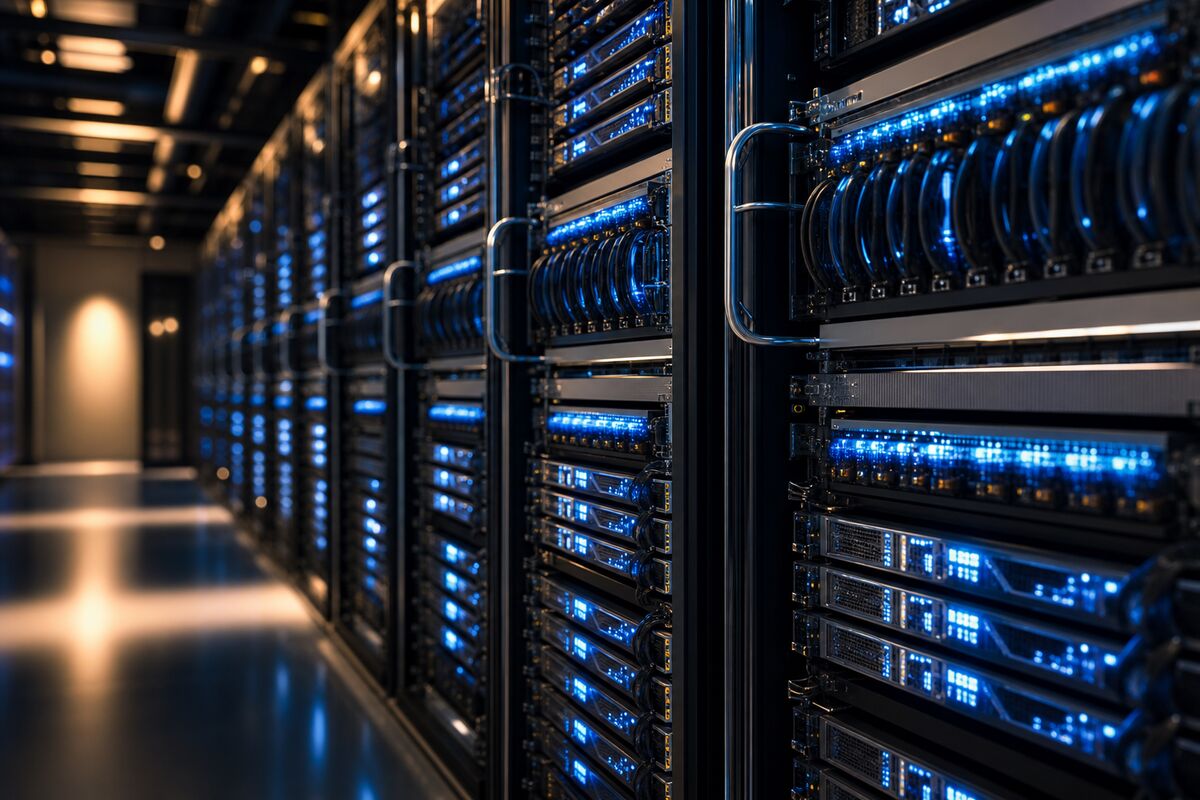
The AI boom has been built on more than algorithms and ambition. It also requires an expensive physical foundation—and Oracle’s credit market is beginning to show what happens when that foundation is financed with debt. Investors are pushing up the cost of protection against an Oracle default, turning the company into a live test of how much financial strain the AI infrastructure race can absorb.
That signal is not a declaration that Oracle is about to default. Credit default swaps are insurance-like contracts whose rising cost indicates that investors perceive more credit risk. But the message is difficult to ignore: as companies commit capital to the infrastructure behind artificial intelligence, lenders and markets may become less forgiving of balance-sheet pressure.
As CNBC reports, the market is raising the cost of credit default swap protection against Oracle. The important development is not a single number—none is provided here—but the direction of the signal. More expensive protection suggests that investors are demanding greater compensation to take on, or hedge against, Oracle’s credit exposure.
Why CDS costs matter
Credit default swaps are often treated as a financial-market weather vane. When protection becomes more expensive, it can indicate that market participants see a higher possibility of credit deterioration. That interpretation requires care. A rising CDS cost does not, by itself, establish that a default is imminent, nor does it settle the question of whether Oracle’s spending strategy will succeed.
Still, credit markets can provide a different perspective from the stock market. Equity investors may focus on the promise of AI demand, new infrastructure and long-term growth. Credit investors are more attentive to the obligations created along the way. Their central question is less glamorous but highly consequential: can the spending required to build AI capacity be supported without creating unacceptable pressure on the company’s finances?
Oracle as an AI stress test
Oracle matters here because the company is positioned as a bellwether AI-infrastructure spender. Its debt load makes the company a useful case study for the broader financing model behind the AI rally. If large-scale infrastructure spending depends on continued access to financing, then higher perceived credit risk could raise the cost of that model even before any default becomes a realistic event.
The transmission mechanism is straightforward in theory. Higher financing costs can make ambitious capital expenditures more burdensome. Those pressures can feed into corporate credit markets, where investors reassess the willingness of companies to take on additional obligations. If that reassessment spreads, market risk appetite could weaken—not necessarily because the AI opportunity disappears, but because the financial price of pursuing it becomes harder to overlook.
That is why Oracle’s CDS signal extends beyond Oracle. Investors holding AI-adjacent technology stocks and other high-growth names may be watching the credit market for clues about how investors value expansion that requires heavy infrastructure spending. A more cautious credit market could challenge companies whose stories depend on continued investment, even if those companies are not directly connected to Oracle.
The bullish and bearish readings
The bearish interpretation is clear: rising CDS costs may indicate that debt-financed AI infrastructure is becoming a source of broader corporate credit stress. If financing becomes more expensive, companies could face tougher choices about the pace and scale of capital expenditures. That could temper enthusiasm across the AI complex and test the sustainability of the rally’s financial underpinnings.
The bullish interpretation is more restrained. The source headline notes that some investors are not overly concerned, suggesting that the market may view Oracle’s credit signal as manageable rather than catastrophic. From this perspective, higher CDS costs could reflect caution around a major infrastructure spender without proving that the AI investment cycle is breaking down. Credit markets may be asking harder questions while still leaving room for confidence in the underlying opportunity.
Both readings can coexist. Rising protection costs deserve attention because they reveal a shift in perceived risk. The absence of an imminent-default conclusion matters just as much. For investors, Oracle’s case is less a verdict on AI than a reminder that technological ambition and financial leverage travel together. The next test for the broader rally may not be whether demand for AI remains compelling, but whether the market continues to tolerate the cost of building it.
Bull/Bear Verdict
Bull Case: Some investors are not overly concerned, and rising CDS costs do not by themselves indicate an imminent Oracle default; the AI infrastructure investment cycle may therefore remain durable despite increased credit-market scrutiny.
Bear Case: The higher cost of protection against an Oracle default suggests rising perceived credit risk, potentially signaling that debt-financed AI capital expenditures could pressure corporate credit markets and weaken risk appetite for high-growth technology stocks.