
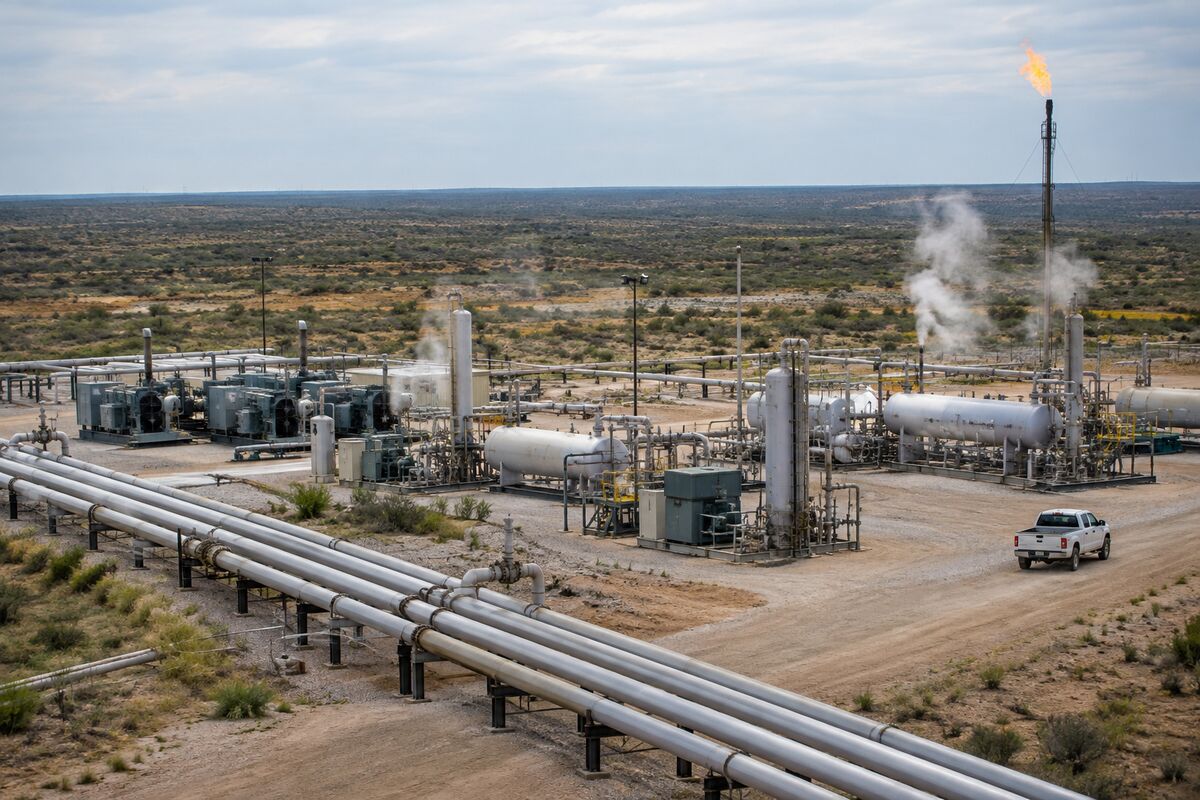
Texas Pacific Land’s approximately $3 billion agreement to acquire EagleRock puts land, royalty, and water-rights assets at the center of the latest Permian Basin consolidation story. The transaction expands TPL’s reach across one of the most closely watched US shale regions, while adding another data point for traders assessing infrastructure exposure beyond direct oil and gas production.
The market’s initial signal was clear: EROK shares rallied 15% following the deal announcement. That move highlights how investors are valuing EagleRock’s position in the transaction and underscores the strategic importance of Permian land and water assets as US shale infrastructure continues to consolidate.
According to the reported deal details, TPL agreed to buy EROK in a transaction valued at approximately $3 billion. The assignment does not provide a purchase-price structure, acreage totals, production figures, or closing conditions, so the clearest analytical focus is the asset footprint and strategic rationale rather than transaction modeling.
Why the land-and-water combination matters
The acquisition expands TPL’s Permian Basin land and water-rights reach. That combination gives the transaction relevance beyond a simple corporate acquisition: land and water access are foundational pieces of the infrastructure supporting shale activity. For energy investors and traders, the deal reinforces the idea that exposure to the Permian can come through ownership of the underlying rights and services around drilling operations, not only through producers.
That distinction matters in a market where commodity prices can be volatile. The source context points to oil-price volatility tied to Middle East supply flows and a diesel-shortage backdrop. Against that setting, assets linked to land, royalties, and water may draw attention because their strategic value is connected to basin access and operating infrastructure. The available information does not establish how the acquisition will perform under any particular oil-price scenario, but it does show why non-production assets remain part of the energy-market conversation.
EROK’s 15% move is the immediate trading signal
EROK’s 15% rally following the announcement is the most concrete market reaction attached to the transaction. For traders, that percentage provides a direct read on the initial response to the approximately $3 billion valuation. For longer-term analysis, however, the share move is only the starting point. The assignment provides no additional information on EROK’s prior share price, valuation multiples, trading volume, or the implied premium.
That limitation is important. A 15% rally indicates a strong immediate repricing, but it does not by itself resolve questions about future asset integration, the eventual financial contribution of the expanded land and water portfolio, or the transaction’s effect on TPL’s operating profile. Those details are not reported in the available source context.
A broader consolidation signal
The TPL-EROK agreement fits within continued consolidation in US shale infrastructure and land-and-royalty assets. Rather than emphasizing unreported production growth, the transaction points to a strategic race for control of the rights and infrastructure that support activity in established basins. TPL’s acquisition of EagleRock could therefore be read as a move to broaden its Permian position while increasing its exposure to land and water resources.
For market participants, the key watchpoints are narrow but significant: the approximately $3 billion transaction value, the expansion of TPL’s Permian land and water-rights reach, and the 15% response in EROK shares. Together, those figures and facts make the deal a relevant indicator of how the market is treating US shale infrastructure assets amid broader energy volatility.
Bull/Bear Verdict
Bull Case: The approximately $3 billion acquisition could strengthen TPL’s strategic position by expanding its Permian Basin land and water-rights reach, while EROK’s 15% rally suggests a positive initial market response.
Bear Case: The 15% EROK share move does not disclose the purchase-price structure, acreage totals, production figures, or closing conditions, leaving the transaction’s ultimate financial impact uncertain.