
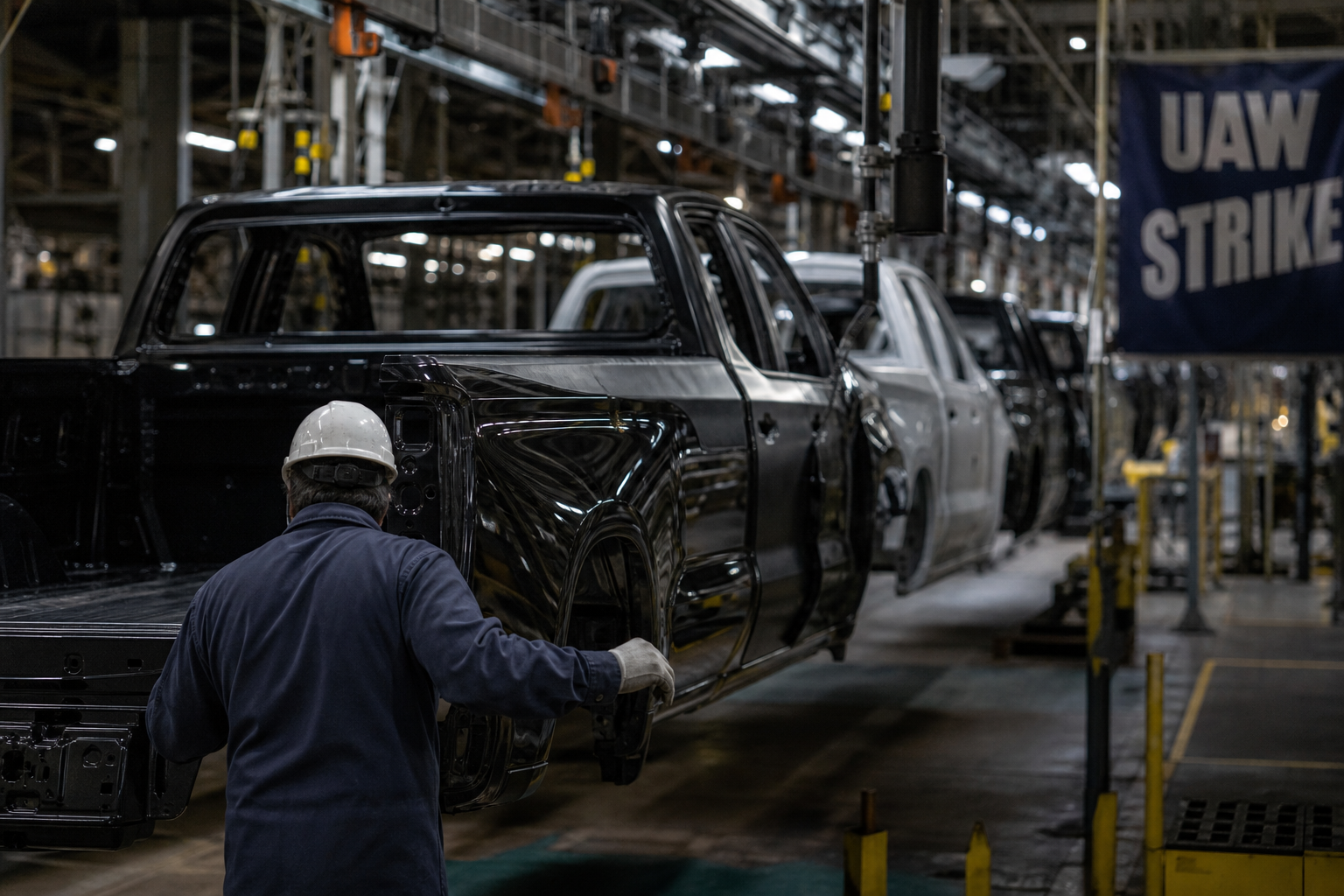
The UAW strike could ripple through General Motors’ operations like a stone thrown into a still pond. Nearly 1,000 workers at a Michigan supplier plant, which produces essential parts for GM’s pickup trucks, have initiated a work stoppage after failing to negotiate a new contract. This disruption raises significant concerns for investors, given the pivotal role of pickup trucks in GM's overall sales and earnings.
The Strike's Immediate Impact
The strike, which commenced on Monday, is not just a labor dispute; it is a potential storm cloud over GM's production schedules. Pickup trucks have long been a cornerstone of GM's lineup, contributing substantially to their revenue stream. The halt in production at this supplier plant could lead to delays in GM’s ability to meet market demand, particularly for its most popular models.
Investors should note that production disruptions can lead to a cascading effect on quarterly earnings. If GM fails to deliver sufficient inventory to dealerships, not only could they miss sales targets, but they may also face increased costs associated with ramping back up production once the strike concludes.
Quarterly Earnings and Market Position
The potential fallout from this strike could be significant. Analysts are now closely watching GM’s upcoming quarterly earnings report, as any negative impact from the strike will likely be reflected in their financial performance. Historically, labor disputes have led to declines in stock prices in the auto industry, and GM is no exception. Investors could see a similar reaction if production issues persist.
Moreover, GM's competitive positioning within the pickup truck market is at stake. As consumer preferences shift and electric vehicle (EV) adoption grows, maintaining a robust lineup of traditional pickup trucks is critical for GM. If their production capabilities are hindered, competitors may seize the opportunity to capture market share.
Long-term Implications
Looking beyond the immediate disruption, the long-term implications of this strike could reshape GM's strategy moving forward. If the union negotiations lead to favorable terms for workers, GM may face increased labor costs. While fair wages are essential, these costs could pressure profit margins, particularly in the highly competitive truck segment.
Furthermore, the shift towards EVs is already prompting automakers, including GM, to rethink their production strategies. If the strike extends, GM may need to pivot more aggressively towards electric models to maintain investor confidence and market strength.
Conclusion
In conclusion, the UAW strike at the Michigan supplier plant presents a multifaceted challenge for General Motors. Investors need to monitor the situation closely, as the potential for disrupted production and subsequent financial impacts could have lasting effects on GM's market position. While strikes are part of the labor landscape, the fallout can reverberate far beyond the negotiation table, influencing investor sentiment and stock performance.
For further details, you can read more about the strike and its implications on CNBC.
Bull/Bear Verdict
Bull Case: If the strike is resolved quickly and GM manages to maintain production without significant delays, it could stabilize investor confidence and support stock prices.
Bear Case: Prolonged disruptions could lead to missed earnings targets, negatively impacting GM's valuation and allowing competitors to take market share.